How VAR Works in Football: A Simple Guide to the Video Assistant Referee
Discover how VAR works in football, when it is used, the review process, and how it helps referees make more accurate decisions.
How VAR Works in Football
Football is one of the world’s fastest and most exciting sports, but referees sometimes have only a split second to make important decisions. To reduce costly mistakes, the Video Assistant Referee (VAR) system was introduced to support match officials.
While VAR has made many decisions more accurate, it has also sparked debates among fans, players, and coaches. Understanding how the system works can help explain why some goals are allowed, others are disallowed, and why penalties are sometimes awarded after play has continued.
What Is VAR?
VAR stands for Video Assistant Referee. It is a team of match officials who watch the game from a video operations room using multiple camera angles. Their role is to help the on-field referee correct clear and obvious errors or deal with serious missed incidents.
The final decision always belongs to the referee on the pitch.
When Is VAR Used?
VAR is only used for four types of match-changing incidents:
1. Goals
Every goal is automatically checked for possible infringements before it is confirmed.
VAR checks for:
• Offside
• Fouls in the build-up
• Handball
• The ball going out of play before the goal
If no offence is found, the goal stands.
2. Penalty Decisions
VAR reviews whether:
• A penalty should have been awarded.
• A penalty was awarded incorrectly.
• A foul happened inside or outside the penalty area.
3. Direct Red Cards
VAR can recommend a review if a player deserves a straight red card for serious foul play or violent conduct.
It does not review second yellow cards.
4. Mistaken Identity
If the referee cautions or sends off the wrong player, VAR can correct the mistake.
How Does VAR Work?
The review process follows several steps:
Step 1: Incident Occurs
The referee makes an initial decision while play continues.
Step 2: Silent Check
The VAR team immediately reviews the incident using different camera angles without stopping the match if possible.
Step 3: Communication
If VAR believes the referee made a clear and obvious error, they communicate through a headset and recommend a review.
Step 4: On-Field Review
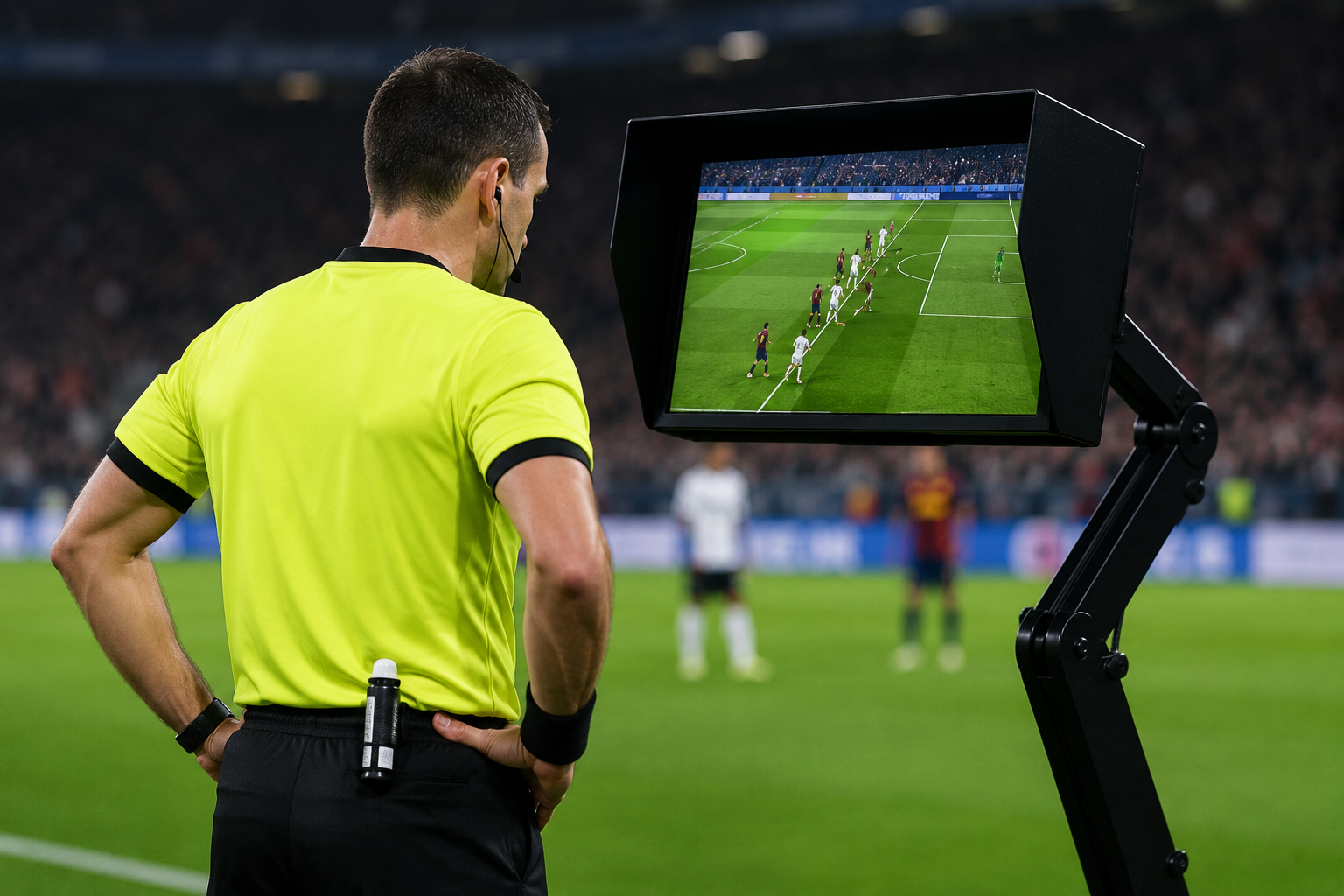
For subjective decisions, the referee may watch the incident on the pitch-side monitor before making the final decision.
For factual decisions, such as offside, VAR usually provides the information directly.
Step 5: Final Decision
After considering the evidence, the referee confirms or changes the original decision.
Advantages of VAR
VAR has improved football in several ways:
• Corrects obvious refereeing mistakes.
• Makes offside decisions more accurate.
• Reduces cases of mistaken identity.
• Helps ensure fairer outcomes.
• Increases confidence in major decisions.
Disadvantages of VAR
Despite its benefits, VAR remains controversial because:
• Reviews can interrupt the flow of the game.
• Fans often wait before celebrating goals.
• Some decisions remain subjective.
• Tight offside calls can still divide opinion.
Common Misconceptions About VAR
“VAR makes every decision.”
False. VAR only intervenes for specific match-changing incidents.
“VAR replaces the referee.”
False. The referee remains in charge and makes the final decision.
“Every foul is reviewed.”
False. Most ordinary fouls are not checked by VAR.
Why VAR Is Important
Football matches can be decided by a single goal, penalty, or red card. By reviewing the most important moments, VAR aims to reduce major errors while preserving the referee’s authority.
Although no system is perfect, VAR has increased the accuracy of crucial decisions and continues to evolve as technology improves.
VAR has changed modern football by combining technology with traditional refereeing. While debates over certain decisions will always exist, the system has helped make the game fairer by correcting clear mistakes that could influence the outcome of a match.
Understanding when and how VAR is used allows fans to appreciate why some decisions take longer and why accuracy is often prioritised over speed.