WNBA Small Forwards: Roles, Skills, and Importance in Women’s Basketball
Discover how WNBA small forwards help their teams score, rebound, defend, create chances, and win games through skill, speed, and teamwork.
The Players Who Can Do It All
In the Women’s National Basketball Association (WNBA), every player has a role to play. Some players focus on scoring, others organise the attack, while some protect the basket. However, small forwards are often expected to do a little bit of everything.
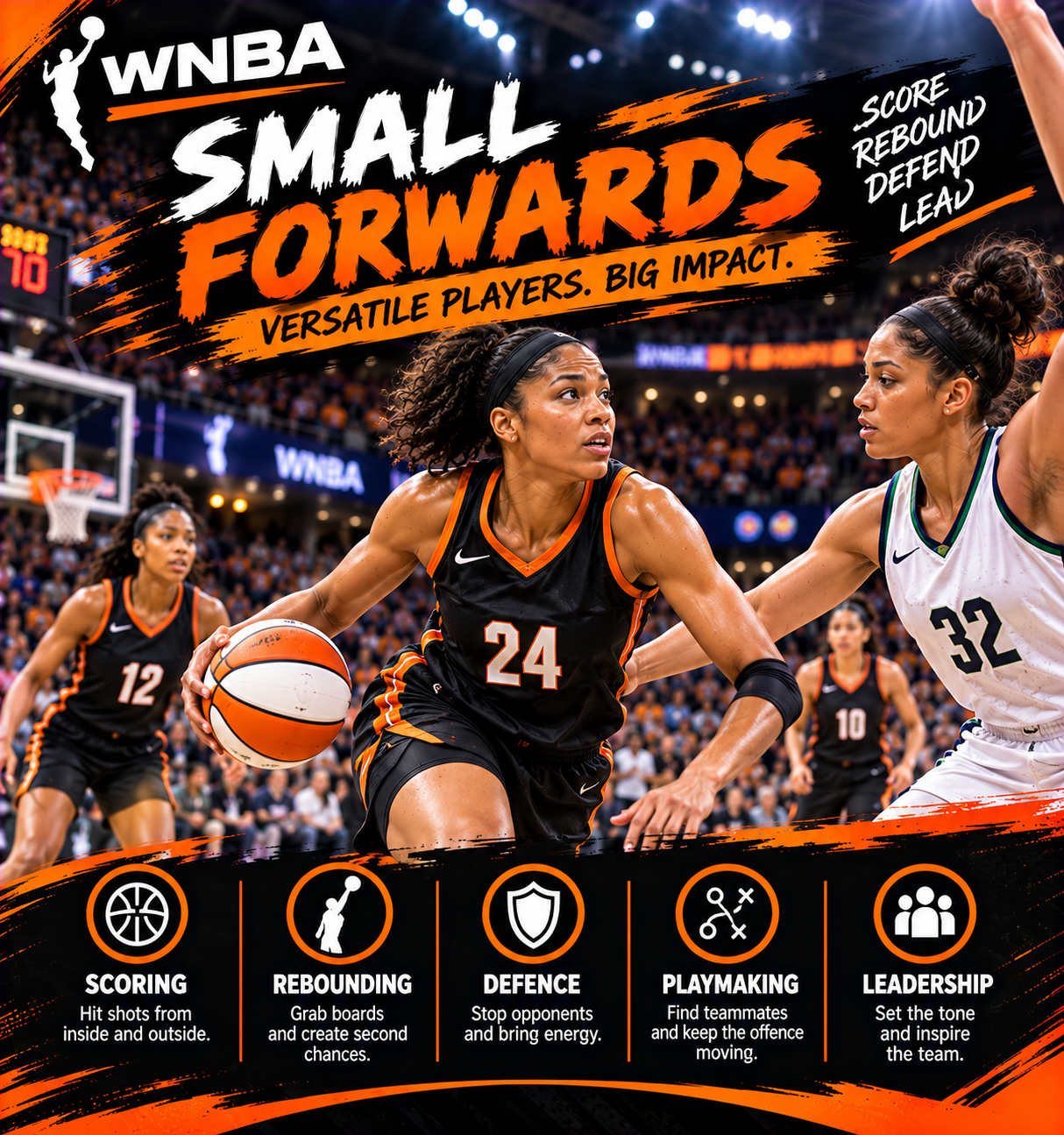
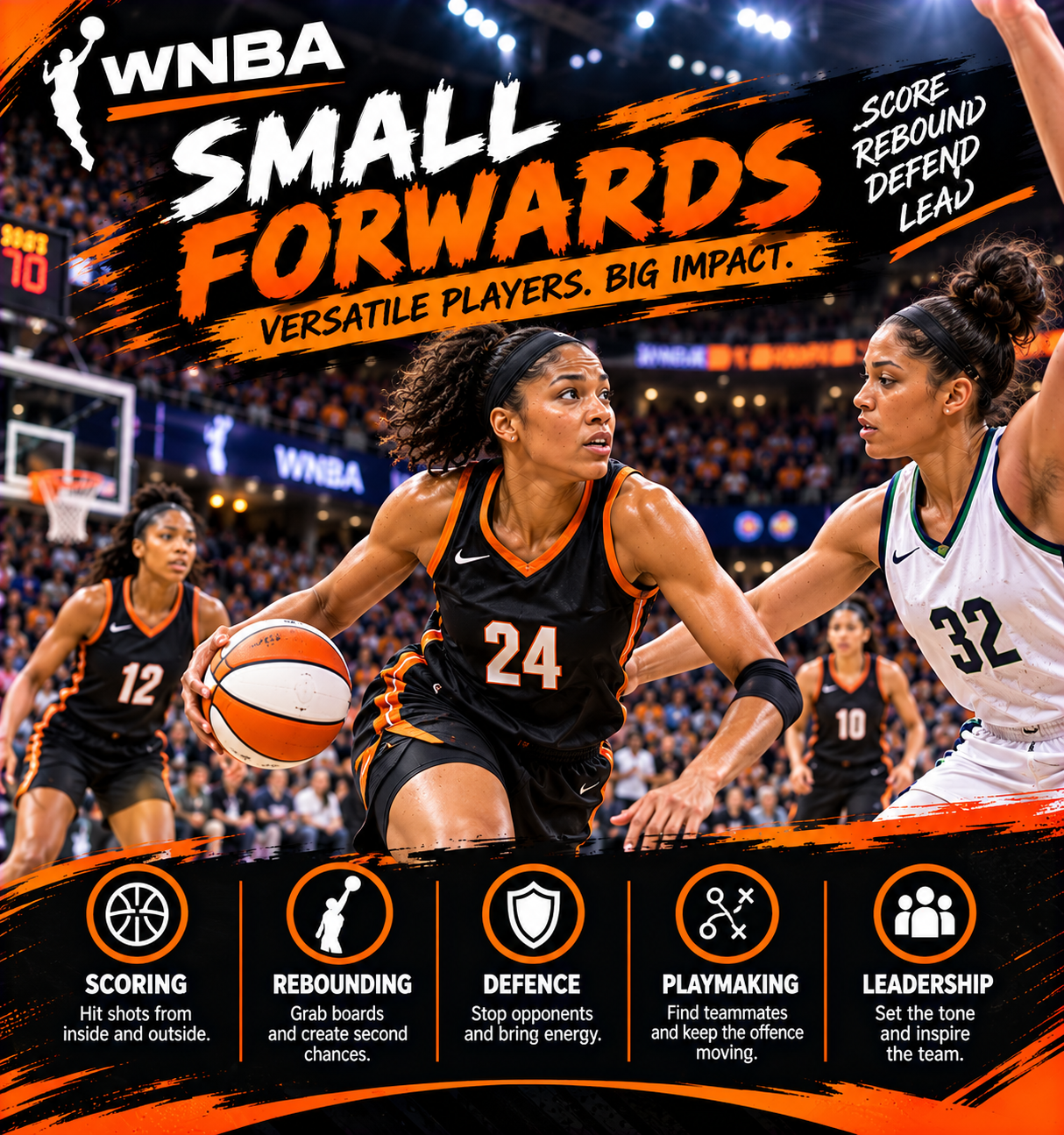
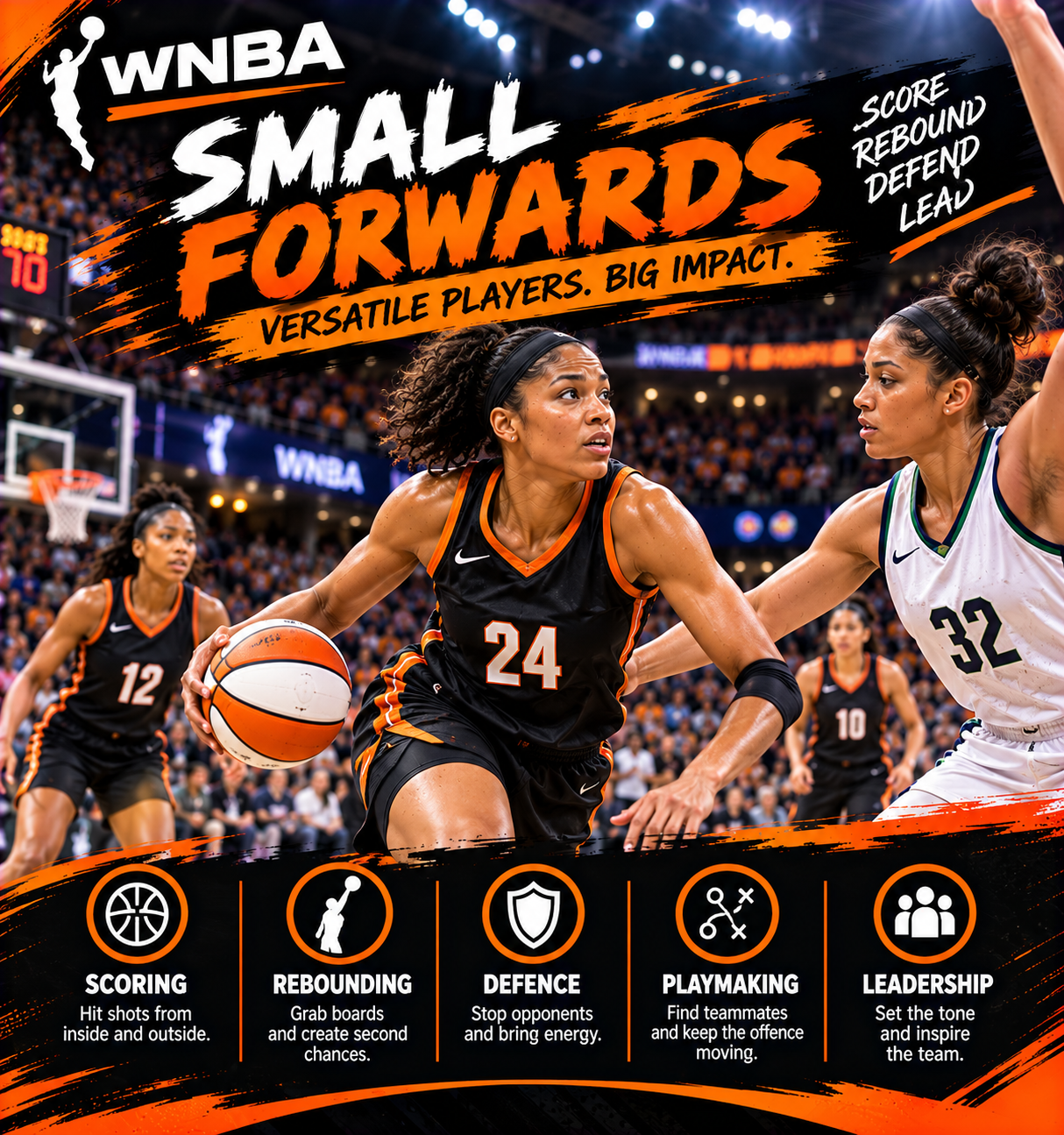
Small forwards are known for their ability to score, defend, collect rebounds, and support their teammates. They often combine the speed of a guard with some of the strength needed to compete against bigger players.
Their ability to contribute in different areas makes them important to their teams. When a team needs points, strong defence, or help on the boards, a small forward may be called upon to step up.
In this article, we explain the role of small forwards in the WNBA, the skills they need, and how they help their teams succeed.
1. What Is a Small Forward?
A small forward is traditionally known as the number three position in basketball. The player often operates on the wings and can contribute both near the basket and farther away from it.
Small forwards are usually expected to be flexible because they may need to guard different types of opponents. They might defend a quick guard on one play and challenge a stronger forward on another.
The exact job depends on the team’s tactics and the player’s strengths. Some small forwards are strong scorers, while others are especially valuable because of their defence, rebounding, and passing.
2. Scoring Points From Different Areas
One important job of a small forward is helping the team score.
Small forwards may shoot three pointers, take mid range shots, or drive toward the basket. Their ability to score in different ways can make them difficult for opponents to defend.
For example, if a defender moves too close to stop an outside shot, the small forward may drive past them. If the defence blocks the route to the basket, the player may pass to an open teammate.
Good scoring is not only about taking many shots. It also means choosing the right moments, staying calm under pressure, and helping the team get the best possible scoring chance.
3. Collecting Important Rebounds
Rebounding is another important responsibility.
A rebound happens when a player collects the ball after a missed shot. An offensive rebound gives the attacking team another chance to score, while a defensive rebound helps the team regain possession.
Small forwards can help with both types of rebounds. They need to watch the ball, find the right position, and compete strongly when it comes off the rim.
A good rebounder can make a major difference in a close game. Even when a player is not scoring many points, collecting rebounds can help the team control the game.
4. Defending Different Opponents
Small forwards are often asked to defend players with different skills and body sizes.
They may need to move quickly to stop a guard from driving toward the basket or use their strength and positioning to challenge a forward.
Good defence requires concentration, quick footwork, communication, and discipline. Players must know when to challenge a shot, when to block a passing lane, and when to help a teammate.
Strong defensive play can also lead to steals and fast breaks, giving the team more chances to score.
5. Creating Chances for Teammates
Small forwards do not always have to finish an attack themselves. Sometimes, the best decision is to pass the ball.
When defenders focus on stopping a small forward, another player may become free. A smart pass can help that teammate take an easier shot.
Small forwards may also help move the ball around the court, set screens, and create space for other players.
This kind of teamwork makes an attack harder to predict. It also shows why basketball success depends on more than individual scoring.
6. Using Speed, Strength, and Skill
Small forwards need a useful combination of physical and basketball skills.
Speed helps them move past defenders and return quickly to defend. Strength helps them compete for rebounds and hold their position. Ball handling skills allow them to control the ball while moving through traffic.
Balance and coordination are also important, especially when shooting while moving or changing direction quickly.
Players develop these skills through regular practice, fitness training, team drills, and experience in competitive games.
7. Showing Leadership on the Court
Leadership is not limited to team captains or the most famous players. Small forwards can lead through their effort, communication, and decisions.
They can encourage teammates, help organise the defence, and stay focused when the team faces pressure.
A small forward who works hard on both ends of the court can set a strong example. Their willingness to defend, pass, rebound, and make smart choices can help the whole team perform better.
8. Small Forwards to Watch in Women’s Basketball
Several WNBA stars have shown how valuable versatile forwards can be.
A'ja Wilson is widely recognised for her scoring, rebounding, defence, and strong play around the basket. She is primarily known as a forward and centre, showing how players can contribute across different areas of the court.
Breanna Stewart is another example of an all round forward. She can score from different positions, rebound, defend, and create opportunities for teammates. Her skill set shows why versatility is valuable in modern basketball.
Napheesa Collier is known for her ability to score, defend, rebound, and contribute in several ways. Her performances demonstrate the importance of combining individual talent with team play.
These players do not all play the same position in every situation. Their games nevertheless show how forwards who contribute in several areas can have a major impact on a team.
9. How Small Forwards Help Teams Win
A strong small forward gives a coach more choices during a game.
If the team needs points, the player may take on more scoring responsibility. If the team needs defence, the player can help guard a dangerous opponent. If the team is struggling to collect rebounds, the small forward can help compete for the ball.
This flexibility can be especially useful when injuries, foul trouble, or changes in the opponent’s tactics affect the game.
Still, no player can win alone. Good coaching, teamwork, fitness, and contributions from the entire squad remain important.
10. The Future of Small Forwards in the WNBA
Basketball continues to develop, and players are increasingly expected to have more than one skill.
Small forwards who can shoot from long range, defend several positions, handle the ball, and make accurate passes can give their teams an advantage.
Young players who want to play this position should practise shooting, footwork, ball control, rebounding, and defence. Learning how to read the game and make smart decisions is just as important as physical ability.
As women’s basketball continues to grow, versatile forwards will remain important to teams looking for players who can make a difference in many parts of the game.
WNBA small forwards are valuable because they can contribute in several ways. They score points, collect rebounds, defend opponents, create chances for teammates, and provide leadership.
Their ability to adjust to different situations makes them important to a team’s success. The best small forwards understand that winning is not only about personal statistics but also about helping teammates and making the right decisions.