WNBA Basketball Academies: How Young Players Train for Success
Discover how basketball academies help young players improve their skills, build confidence, learn teamwork, and prepare for college and professional women's basketball.
Where Future Basketball Stars Begin
Every professional basketball player starts somewhere. Before athletes become stars in the Women's National Basketball Association (WNBA), many spend years learning the game, practising their skills, and competing against other talented players.
For young girls who dream of playing professional basketball, finding the right training environment can make a big difference.
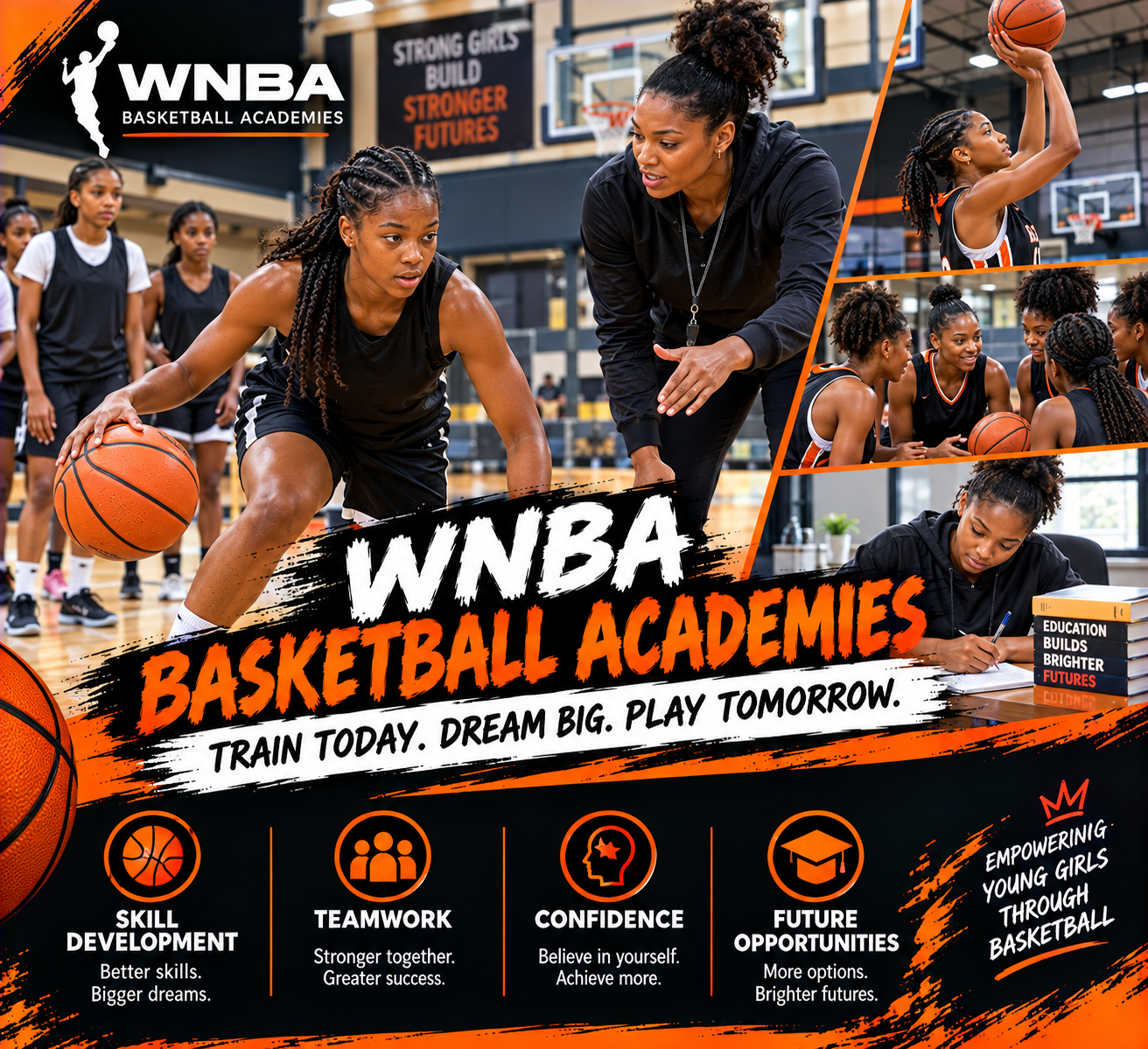
Basketball academies and development programmes help young athletes learn the basics, improve their performance, and understand what it takes to compete at a higher level.
These programmes may offer coaching, fitness training, organised games, mentorship, and opportunities to learn from experienced players.
However, attending an academy does not guarantee a professional career. Players must continue working hard, making progress, and taking advantage of opportunities.
In this article, we explain how basketball academies work, why they matter for young female athletes, and how they can help prepare players for future opportunities in basketball.
1. What Is a Basketball Academy?
A basketball academy is a programme or organisation that helps players develop their basketball skills.
Some academies focus on children who are learning the game for the first time. Others work with experienced teenagers who want to compete at a higher level.
Training may include shooting, passing, dribbling, defence, rebounding, movement, and decision-making.
Players may also take part in organised competitions to test what they have learned.
The exact services offered depend on the academy. Some provide school support or accommodation, while others operate as local training centres with scheduled practice sessions.
For girls who want to pursue basketball seriously, a good development programme can provide structure, guidance, and regular opportunities to improve.
2. Learning the Basic
Skills of Basketball
Before young athletes can compete at a high level, they need to understand the basics.
These include controlling the ball, passing accurately, shooting correctly, moving without the ball, and defending opponents.
Coaches often begin with simple exercises before introducing more difficult drills.
For example, a beginner may practise dribbling with either hand before learning how to control the ball while changing direction.
A young shooter may first work on proper technique before practising shots from different areas of the court.
Learning these skills takes patience and repetition.
Players should focus on improving their technique rather than trying to perform difficult moves before they are ready.
Strong basic skills provide a foundation for future development.
3. Why Girls Need More Opportunities in Basketball
Young girls with basketball talent need opportunities to train, compete, and learn from good coaches.
When these opportunities are limited, it may become harder for them to discover their potential.
Basketball academies and community programmes can help create more ways for girls to participate in the sport.
They can organise training sessions, competitions, mentoring activities, and events that introduce young players to women's basketball.
Seeing successful female athletes can also encourage girls to believe that basketball offers real opportunities.
Developing women's basketball begins long before players reach professional leagues. It starts with giving young athletes the chance to learn and enjoy the game.
4. The Importance of Qualified Coaches
Good coaching is an important part of player development.
Coaches help young athletes understand basketball techniques, learn team rules, and correct mistakes.
They can also identify areas where a player needs more practice.
For example, a coach may notice that a young guard needs to improve her passing under pressure. Another player may need to work on defensive positioning or shooting consistency.
A good coach explains corrections clearly and gives players opportunities to practise.
Coaches should also create a safe and respectful environment where young athletes can ask questions without fear of humiliation.
The goal is to help each player improve while developing a positive relationship with the game.
5. Building Confidence Through Training
Confidence can affect how young players perform.
An athlete who is afraid of making mistakes may hesitate when shooting, passing, or attacking the basket.
Regular training helps players become more comfortable with their skills.
As they improve, they may begin to trust their decisions and take on new challenges.
Confidence also grows when players learn how to respond to mistakes.
Missing a shot does not mean an athlete cannot become a good shooter. It may simply show that she needs more practice or a small change in technique.
Coaches can help players focus on progress instead of expecting perfection.
Young athletes should learn that improvement takes time and that mistakes are part of learning.
6. Physical Fitness and Safe Training
Basketball requires strength, speed, balance, coordination, and stamina.
Young athletes need suitable fitness training to help them move effectively around the court.
Depending on their age and development, training may include running, movement exercises, balance work, and age-appropriate strength activities.
However, training should be suitable for the player's needs and ability.
Young athletes should not be pushed into unsafe exercise routines or excessive training.
Rest, hydration, good nutrition, and recovery are also important.
Coaches and parents should pay attention to pain, unusual tiredness, and other signs that a player may need a break or professional assessment.
The purpose of fitness training is to support healthy development and improve performance safely.
7. Learning Teamwork and Communication
Basketball is a team sport, so players must learn how to work with others.
A talented athlete may have excellent individual skills, but she still needs to pass, communicate, defend, and understand her teammates' movements.
Academy training can help young players develop these abilities.
Coaches may use small-sided games and team drills that encourage athletes to share the ball and make decisions together.
Players learn to call out screens, warn teammates about opponents, and provide support during defensive plays.
They also learn that winning is not only about personal scoring.
Good teamwork helps athletes understand their roles and appreciate what every teammate contributes.
8. Competing Against Other Young Players
Training is important, but players also need opportunities to use their skills in games.
Competitions help athletes experience real basketball situations.
They must make decisions quickly, respond to pressure, and adjust to opponents with different strengths.
Games can reveal areas that need more attention during practice.
For example, a player may shoot well during training but struggle when defenders apply pressure. Competing regularly can help her understand how to improve in that situation.
However, young athletes should not be judged only by wins and losses.
Development, effort, sportsmanship, and learning from mistakes are also important measures of progress.
9. Balancing Basketball With Education
Young athletes should not have to ignore their education to pursue basketball.
School helps develop reading, writing, communication, problem-solving, and other skills that are valuable throughout life.
Education can also prepare players for careers beyond sports.
Families and coaches should encourage young athletes to manage their time carefully so they can attend classes, complete assignments, rest, and practise.
Some programmes may provide academic support, but the services available vary.
Parents should ask questions about school arrangements before enrolling a child in a training programme that requires significant time away from home.
A balanced approach can help young athletes develop as basketball players and as individuals.
10. Learning From Experienced Players
Experienced athletes can offer useful advice to young players.
They may explain how to prepare for games, manage disappointment, communicate with coaches, and stay focused during difficult moments.
Some academies invite former players or coaches to speak with participants or demonstrate basketball techniques.
Mentorship can also help young girls understand the different paths available in women's basketball.
Not every athlete follows the same journey. Some progress through school and college basketball, while others may find opportunities through different development programmes.
Learning from experienced people can help young players understand their options and make informed decisions.
11. Developing Basketball Intelligence
Basketball intelligence means understanding what is happening during a game and choosing the right response.
Players need to recognise defensive positions, identify open teammates, understand spacing, and know when to attack or slow down.
These skills develop through practice, coaching, watching games, and gaining experience.
For example, a player may learn that passing to an open teammate is better than forcing a difficult shot.
A defender may learn to anticipate an opponent's movement instead of reacting too late.
Academies can help players develop these abilities by teaching them to think about why a particular decision works.
Basketball intelligence becomes especially important as the level of competition increases.
12. Understanding the Path to Professional Basketball
Young players who dream of joining the WNBA should understand that there is no single path that guarantees success.
Some athletes develop through school and college basketball. Others gain experience through professional leagues or other recognised basketball programmes.
Players must meet the league's eligibility requirements before entering the WNBA Draft or joining the league through another permitted route.
An academy can help athletes develop skills, but it cannot promise that they will be drafted or signed by a professional team.
Families should research the available opportunities carefully and seek accurate information from official basketball organisations.
Understanding the process can help young players set realistic goals and prepare for the next stage of their development.
13. Helping Young Players Set Goals
Setting clear goals can help athletes remain focused.
Instead of simply saying, "I want to become a professional basketball player," a young athlete can identify smaller steps that support that dream.
For example, she may aim to improve her free-throw technique, become more comfortable using her weaker hand, or communicate better during games.
These goals give her something specific to work on.
Coaches can help players review their progress and identify the next area for improvement.
Goals should be challenging but realistic for the player's age, experience, and circumstances.
Regularly reviewing progress also helps young athletes recognise how much they have improved.
14. The Role of Parents and Guardians
Parents and guardians can make an important contribution to a young athlete's development.
They may help with transport, equipment, school responsibilities, and finding suitable training opportunities.
They can also provide encouragement when a player experiences disappointment.
However, adults should avoid placing excessive pressure on children to win or become professional athletes.
Young players need time to learn, make friends, enjoy the game, and develop at their own pace.
Before choosing an academy, families should ask about coaching standards, fees, training schedules, safeguarding policies, and the programme's record of helping players develop.
A safe and supportive environment should be a priority.
15. How to Choose a Good Basketball Academy
Not every academy offers the same quality of training.
Families should research programmes before making a decision.
Important questions include:
Are the coaches suitably experienced and qualified?
Are training sessions appropriate for the players' ages and abilities?
Does the programme have clear safety and child protection rules?
Are fees and additional costs explained clearly?
Does the academy encourage education and healthy development?
Are players treated respectfully?
Does the programme make realistic claims about its results?
Families should be cautious about organisations that promise guaranteed scholarships, professional contracts, or WNBA careers in exchange for large payments.
A trustworthy academy should explain what it offers without guaranteeing outcomes that it cannot control.
16. Opportunities for Young Players in Nigeria and Africa
Girls across Nigeria and other African countries have opportunities to develop their basketball skills through school competitions, local clubs, community programmes, and organised training centres.
Access to facilities, equipment, transport, and qualified coaching can differ from one area to another.
Families can begin by contacting recognised local basketball clubs, school sports departments, and basketball associations to learn about available programmes.
Young athletes may also benefit from watching women's basketball, studying the skills of experienced players, and practising regularly with suitable guidance.
It is important to verify the reputation of any programme before paying fees or travelling for training.
African girls should have opportunities to learn, compete, and pursue their sporting ambitions while receiving the support and education they need.
Building the Next Generation of Women's Basketball Stars
Basketball academies can help young girls develop the skills, confidence, discipline, and teamwork needed to progress in the sport.
Good programmes provide suitable coaching, safe training, competition, and guidance that supports the whole athlete.
However, attending an academy is only one part of the journey. Players must continue learning, remain committed, take care of their health, and balance basketball with education.
For young girls dreaming of the WNBA, the first step may be learning to dribble, making their first team, or finding a coach who believes in their potential.
Every player's journey is different, and no programme can guarantee professional success.
What matters is providing young athletes with the opportunity to develop, enjoy basketball, and discover how far their hard work can take them.
Do you think more basketball academies for girls are needed in Nigeria and across Africa? Share your opinion in the comments!