WNBA Defensive Rebounding: How Ending Possessions Helps Teams Win
Learn why defensive rebounding matters in the WNBA and how securing missed shots can stop second chances, start fast breaks and help teams control games.
What Is a Defensive Rebound?
A defensive rebound happens when a player grabs the basketball after an opponent misses a shot.
It means the defending team has successfully stopped the first scoring attempt and can now take possession of the ball.
Defensive rebounding is one of the most important parts of basketball.
Why Defensive Rebounding Matters
A good defensive possession is not always finished when the opponent misses.
If the defending team fails to grab the rebound, the opponent can get another chance to score.
This is why coaches often tell players to finish the defensive possession.
Stopping Second Chances
An offensive rebound gives the attacking team another opportunity.
Defensive rebounds prevent this from happening.
A strong rebounding team can make opponents work much harder for every basket.
Boxing Out Opponents
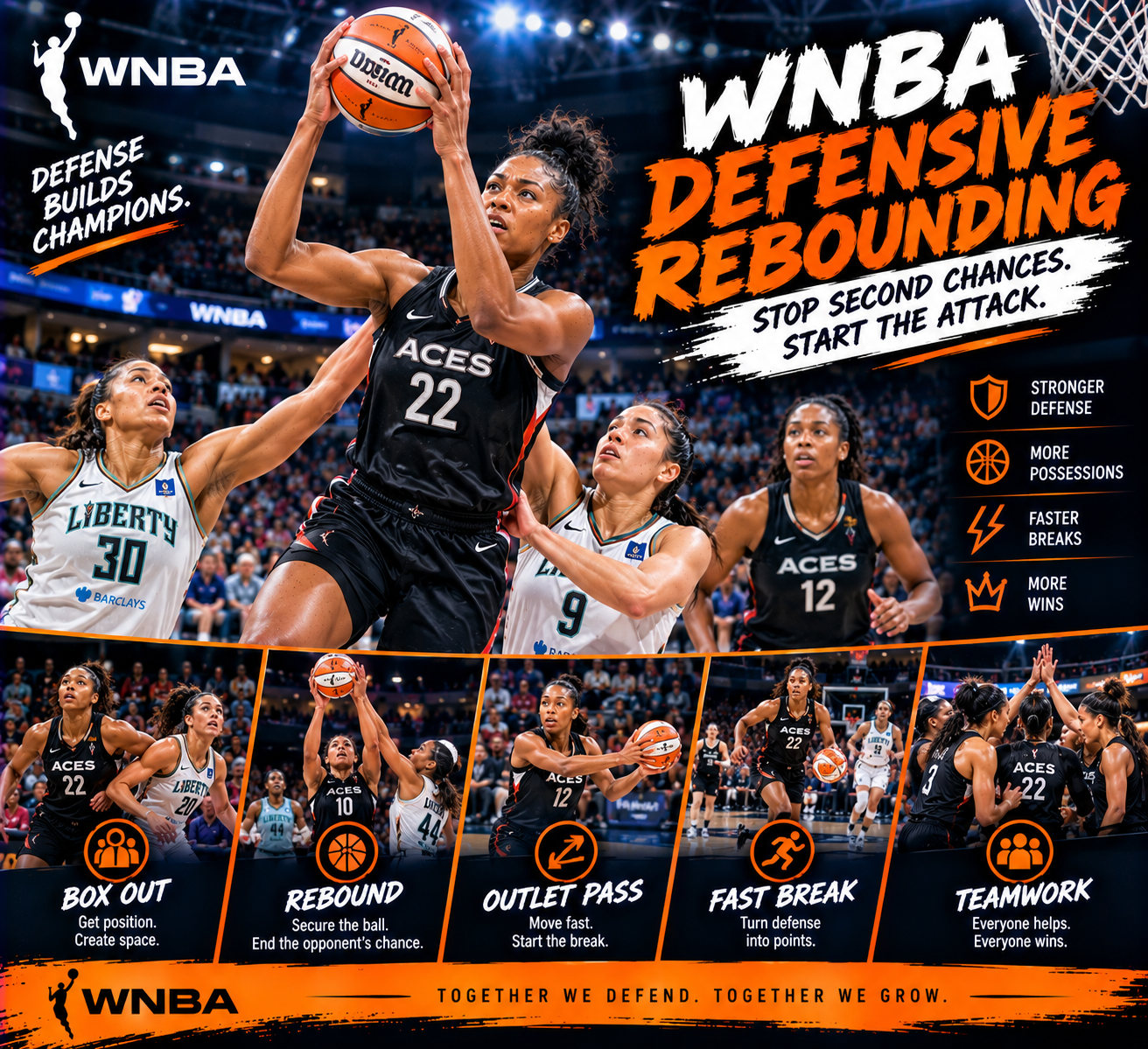
Boxing out is an important rebounding skill.
A player positions her body between an opponent and the basket so she can have a better chance of getting the ball.
Good boxing out does not always mean the player gets the rebound herself.
Sometimes she creates space for a teammate to grab it.
Rebounding Requires Positioning
Players need to understand where the ball may go after a missed shot.
A good position can make it easier to reach the rebound.
Players also need to react quickly because the ball can bounce in different directions.
Height Is Not Everything
Tall players often have an advantage near the basket, but height alone does not guarantee a rebound.
Smaller players can become excellent rebounders through timing, effort, positioning and quick reactions.
The player who works hardest can sometimes beat a taller opponent to the ball.
Defensive Rebounding and Fast Breaks
A defensive rebound can immediately start an attack.
After grabbing the ball, a player may quickly pass to a guard who runs up the court.
This can turn strong defense into an easy scoring opportunity.
Guards Help With Rebounding Too
Rebounding is not only the responsibility of centers and forwards.
Guards can also help collect defensive rebounds.
When everyone participates, the team can become stronger on the boards.
Protecting the Paint
Defensive rebounding is especially important around the basket.
If a team gives up offensive rebounds close to the rim, opponents may receive easy scoring chances.
Strong rebounding helps protect this area.
Communication Matters
Players need to communicate when preparing for a rebound.
They may call out opponents, identify who they are guarding and tell teammates where the ball is going.
Good communication can prevent confusion.
Rebounding After Three Point Attempts
Three point shots can create rebounds that travel farther from the basket.
Players need to be ready to move toward the ball instead of assuming it will land in one particular place.
Good awareness can make a difference.
Defensive Rebounds in Close Games
A defensive rebound can be extremely valuable late in a close game.
If a team is protecting a small lead, securing a missed shot can stop the opponent from getting another chance.
One rebound can sometimes protect an important lead.
Defensive Rebounds and Teamwork
Strong rebounding is usually a team effort.
One player may box out while another grabs the ball.
A guard may then receive the outlet pass and begin the next attack.
Every player can contribute.
Young Players Can Improve Their Rebounding
Young WNBA players can develop their rebounding by studying positioning and timing.
They can learn to read the flight of the ball and understand when to attack the glass.
Consistent practice can make these skills stronger.
Coaches Study Rebounding
Coaches pay close attention to rebounding numbers and game film.
They may look at how many offensive rebounds the opponent received and why those chances happened.
The team can then work on fixing the problem during practice.
Rebounding Shows Effort
Sometimes rebounding comes down to effort.
A player may have to fight through traffic, chase a loose ball or make several attempts before securing possession.
That kind of effort can give a team an important advantage.
The Importance of Outlet Passing
After securing a defensive rebound, the next pass matters.
A good outlet pass can quickly move the ball away from the defensive end.
This can help the team start a fast break before the opponent has time to set up its defense.
Rebounding Can Change Momentum
A powerful defensive rebound can energize a team.
Players may immediately run down the court and create a scoring opportunity.
The crowd can also react strongly when a player makes a difficult rebound in an important moment.
What Fans Should Watch
The next time you watch a WNBA game, pay attention after every missed shot.
Watch who boxes out, who attacks the ball and who starts the next possession.
These small details can show how much work goes into controlling a basketball game.
Defensive rebounding is about more than simply catching a missed shot.
It requires positioning, strength, timing, communication, effort and teamwork.
A strong defensive rebound can stop second-chance points and immediately give a team an opportunity to attack.
For WNBA teams, finishing defensive possessions can be the difference between giving an opponent another chance and taking control of the game.