WNBA Offensive Rebounds: How Second-Chance Opportunities Can Change Games
Learn how offensive rebounds work in the WNBA, why second chance points matter and how strong rebounding can give teams extra scoring opportunities.
What Is an Offensive Rebound?
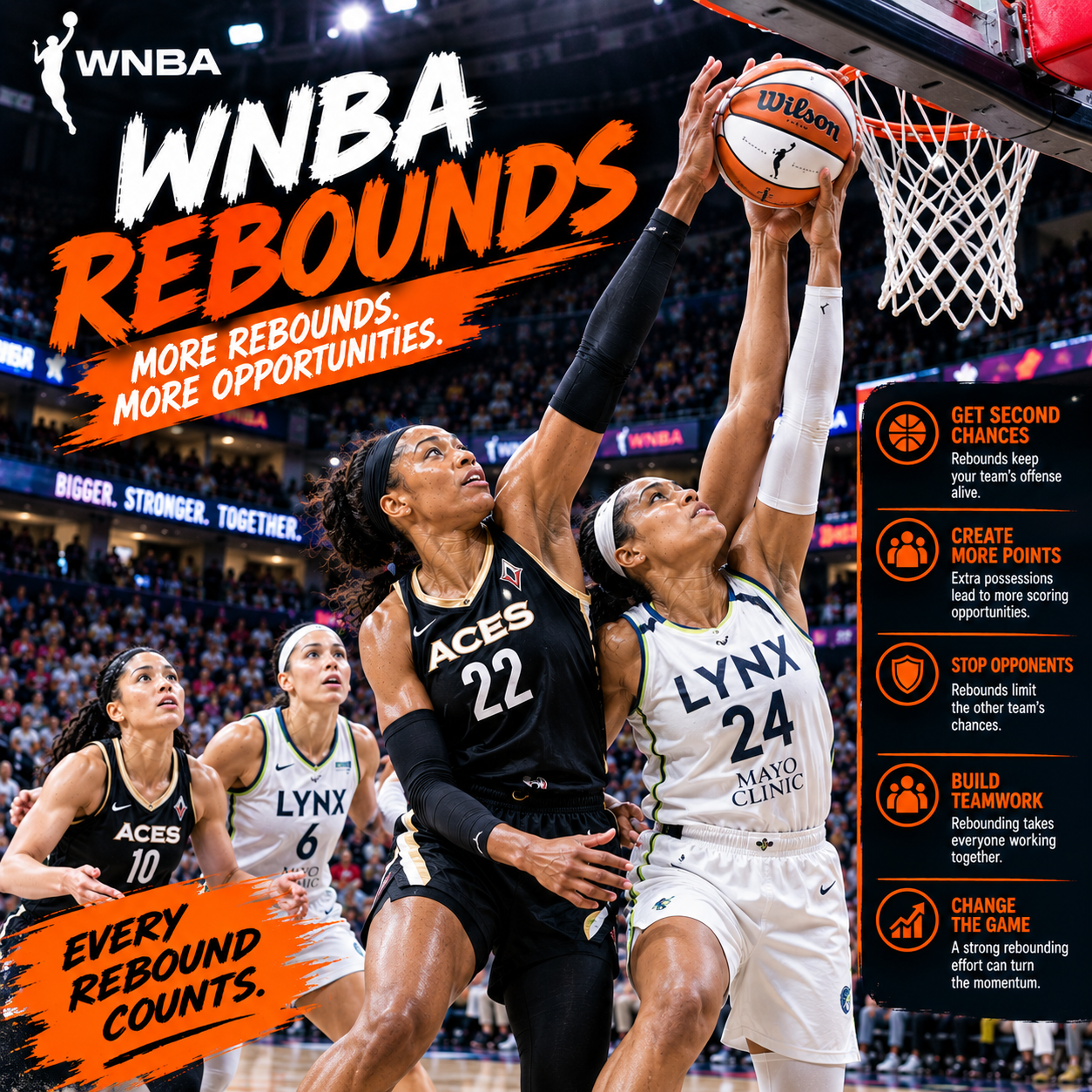
An offensive rebound happens when a player from the attacking team grabs the basketball after her teammate misses a shot.
Instead of allowing the defending team to take possession, the offensive rebound gives the attacking team another chance to score.
This can be very important during a close WNBA game.
Why Offensive Rebounds Matter
A missed shot normally ends an offensive possession.
But when a teammate grabs the rebound, the team gets another opportunity.
This can lead to a quick put back, another three-point attempt or a new offensive play.
Second Chance Points
One of the biggest benefits of an offensive rebound is the chance to score second chance points.
A team may miss its first shot but still score because a teammate collects the rebound.
These extra points can become important when teams are separated by only a few points.
Strong Rebounders Create Extra Chances
Some players have a natural ability to find the basketball after a missed shot.
They watch the ball, position themselves and move quickly toward the basket.
Their effort can give their team possessions that might otherwise be lost.
Positioning Is Important
Offensive rebounding is not simply about jumping high.
Players need to understand where the ball is likely to go after a missed shot.
They also need good positioning before the shot is taken.
Size Can Help, But Effort Matters Too
Taller players can have an advantage around the basket, but height is not the only factor.
Smaller players can also become strong offensive rebounders through timing, effort and positioning.
A player who works hard can sometimes beat a taller opponent to the ball.
Fighting Through Defense
Defenders will try to secure the rebound and end the possession.
Offensive players therefore have to work hard to get around defenders and reach the ball.
This requires strength, movement and good awareness.
Put Back Scores
One common result of an offensive rebound is a put back.
A player grabs the missed shot and immediately attempts another shot near the basket.
Because she is already close to the rim, she may have a good chance to score.
Passing After an Offensive Rebound
A player does not always have to shoot immediately after grabbing an offensive rebound.
She may notice that defenders have collapsed around her.
In that situation, passing the ball back outside can create an open three point opportunity.
Offensive Rebounds and Three Point Shooting
Three point shooting can create more offensive rebound chances.
When a long shot misses, the ball can bounce farther from the basket.
Teammates need to read the shot and move toward possible rebound areas.
Defensive Teams Must Finish the Possession
Good defense does not always end when an opponent misses a shot.
The defending team must also secure the rebound.
If it fails to do so, the offense can receive another opportunity.
This is why coaches often stress the importance of finishing defensive possessions.
Offensive Rebounds Can Change Momentum
A strong offensive rebound can bring energy to a team.
Imagine a player misses a difficult shot, grabs her own rebound and scores.
The crowd reacts, teammates become excited and the opponent may feel more pressure.
One play can change the atmosphere inside an arena.
Late Game Offensive Rebounds
Offensive rebounds can be especially valuable late in games.
A team that is behind may need extra possessions to catch up.
A rebound can give the team another chance to score instead of allowing the opponent to take control of the ball.
Young Players Can Learn Rebounding
Young WNBA players can improve their rebounding by studying positioning and timing.
They can learn to watch the ball instead of simply watching their opponent.
They can also learn when to attack the glass and when to return to defense.
Teamwork Creates Rebounding Opportunities
Offensive rebounding is not always an individual effort.
Teammates can help by creating space, setting screens and fighting for position.
Some players may also stay back to prevent an opponent from starting a fast break.
Coaches Study Rebounding
Coaches can review game footage to see how their team handles missed shots.
They may look at whether players are getting into good positions and whether defenders are being boxed out.
These details can help teams improve.
Why Fans Should Watch Offensive Rebounds
The next time you watch a WNBA game, pay attention after every missed shot.
Do not immediately look away when the ball does not go in.
Watch where the players move and see who reaches the rebound.
You may notice that some of the most important plays happen immediately after a missed shot.
WNBA offensive rebounds can provide teams with valuable second chances.
They require effort, positioning, timing, strength and teamwork.
A missed shot does not always mean the possession is over.
A strong offensive rebound can create another basket, another three point attempt or another opportunity to attack.
For fans, understanding offensive rebounding makes it easier to see why every possession matters and why players continue fighting for the ball even after a shot misses.