
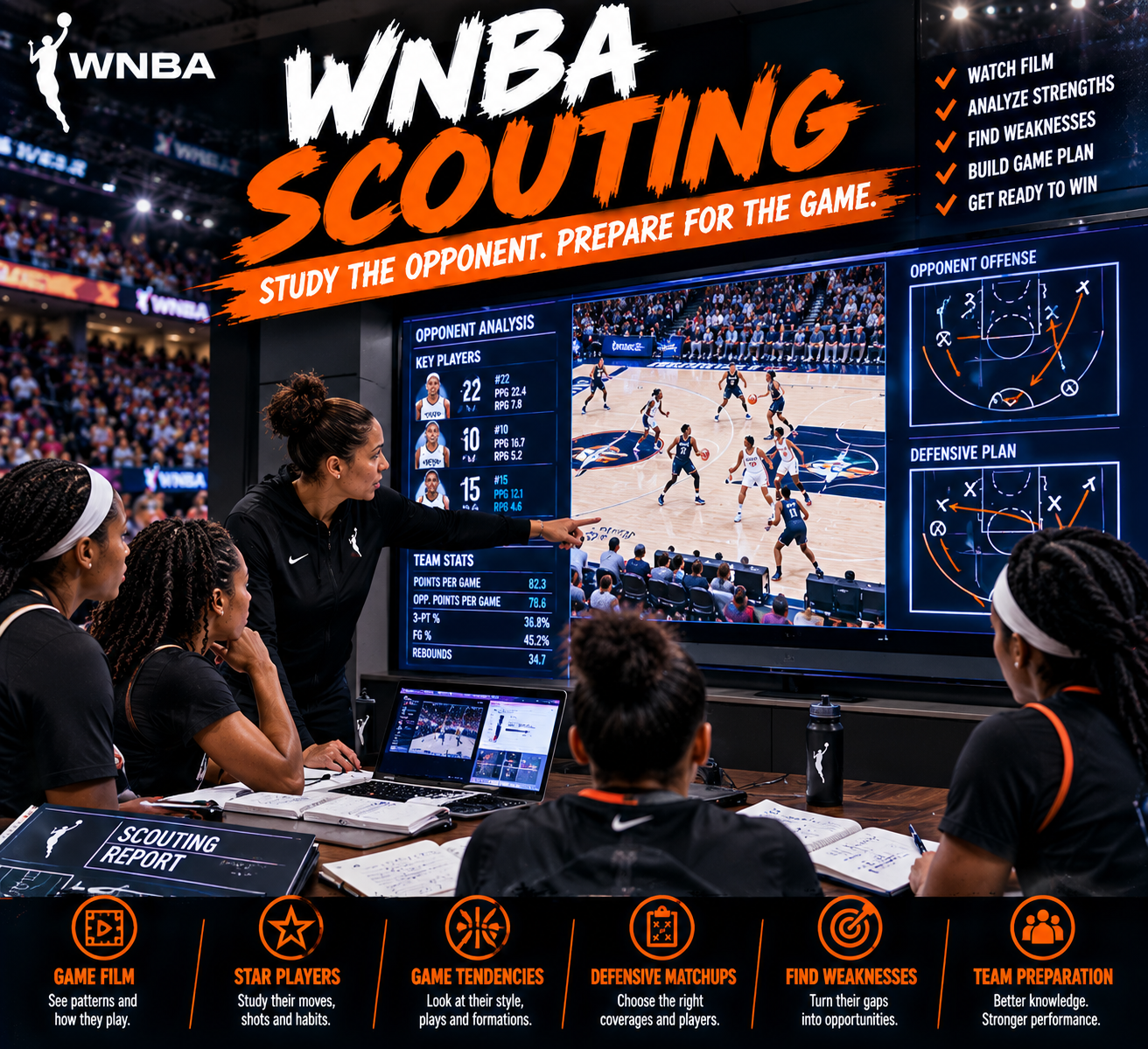
WNBA Scouting: How Teams Study Opponents Before Big Games
Learn how WNBA teams scout opponents, study game film, prepare defensive plans and identify strengths and weaknesses before important basketball games.
What Is WNBA Scouting?
Scouting is the process of studying an opposing team before playing against them.
WNBA coaches and players look at previous games to understand how an opponent plays.
They study things like scoring, defense, passing, shooting, player movement and common plays.
The information can then help the team prepare for the upcoming game.
Why Scouting Matters
WNBA teams face different opponents with different styles.
One team may depend heavily on three-point shooting, while another may prefer attacking the basket.
Scouting helps players understand what they may face before stepping onto the court.
Studying Game Film
Game film is one of the main tools used during scouting.
Coaches can watch previous games and look for patterns.
They may study how an opponent starts games, how they attack when behind and what plays they use in important moments.
Studying Star Players
Teams pay close attention to dangerous players.
Coaches may study how a scorer creates space, which direction she prefers to drive and where she likes to receive the ball.
Defenders can then prepare for those tendencies.
Understanding Three Point Shooters
Strong outside shooters require special attention.
A scouting report may show where a shooter prefers to take her three point attempts.
Defenders can then focus on staying close and making those shots more difficult.
Preparing for Drives
Teams also study players who like to attack the basket.
Defenders may learn which hand a player prefers and how she reacts when the first path to the basket is blocked.
This information can help the defense prepare.
Studying Pick and Roll Plays
The pick and roll is common in basketball, so teams often study how opponents use it.
Coaches look at who sets screens, how the ball handler reacts and whether the screener rolls or moves outside.
The defense can then decide how it wants to respond.
Finding Weaknesses
Scouting is not only about stopping stars.
Teams also look for areas where the opponent may struggle.
For example, a team may have difficulty defending fast breaks or protecting the ball under pressure.
These details can become part of the game plan.
Preparing Defensive Matchups
Coaches may decide which defenders should guard particular players.
A strong defender could be assigned to an opponent's leading scorer.
Other players may have specific responsibilities depending on the team's defensive strategy.
Studying Team Tendencies
Coaches can also study how an entire team behaves.
Does the team move the ball quickly?
Does it shoot many three pointers?
Does it attack the basket?
Does it rely heavily on one or two players?
Understanding these tendencies can help players prepare.
Scouting Free Throws
Free throws can also be studied.
Coaches may understand which players are strong from the free throw line and which players may be more likely to attack the basket and draw fouls.
Small details can matter during close games.
Preparing for Different Situations
Teams do not only prepare for normal possessions.
They may study how an opponent handles the final seconds of a quarter, close games and situations where it needs a basket quickly.
This can help players react more confidently when those situations happen.
Players Have a Role in Scouting
Scouting is not only the coach's job.
Players also need to study opponents.
They may watch film, attend team meetings and listen carefully to the coaching staff.
Understanding the plan helps players know what to expect.
Scouting and Communication
A scouting plan only works if players communicate.
Defenders may need to warn teammates about screens, shooters or cuts.
Good communication can help the team respond when the opponent changes its strategy.
Teams Can Adjust During the Game
Scouting provides a starting plan, but basketball can change quickly.
An opponent may use a different lineup or introduce a new strategy.
Coaches and players must recognize these changes and adjust during the game.
Young Players Learn From Scouting
Scouting can help young WNBA players develop their basketball knowledge.
They learn how to recognize patterns and understand why certain players are difficult to defend.
This knowledge can make them smarter and more prepared players.
Scouting Does Not Guarantee Success
A team can have a detailed scouting report and still face difficulties.
Players must execute the plan once the game begins.
The opposing team is also making its own adjustments.
Scouting provides information, but execution remains important.
*Why Fans Should Watch the Strategy**
The next time you watch a WNBA game, think about what the teams may have studied before tip off.
Notice how defenders react to certain players.
Watch whether a team tries to stop a particular type of shot or force an opponent into a different area of the court.
These details can reveal the strategy behind the game.
WNBA scouting is an important part of basketball preparation.
Teams study game film, star players, shooting habits, defensive weaknesses, offensive plays and team tendencies before facing opponents.
The goal is to help players understand what they may see and prepare for different situations.
For fans, learning about scouting adds another level to watching WNBA basketball because every game involves more than what happens during the 40 minutes on the court.