
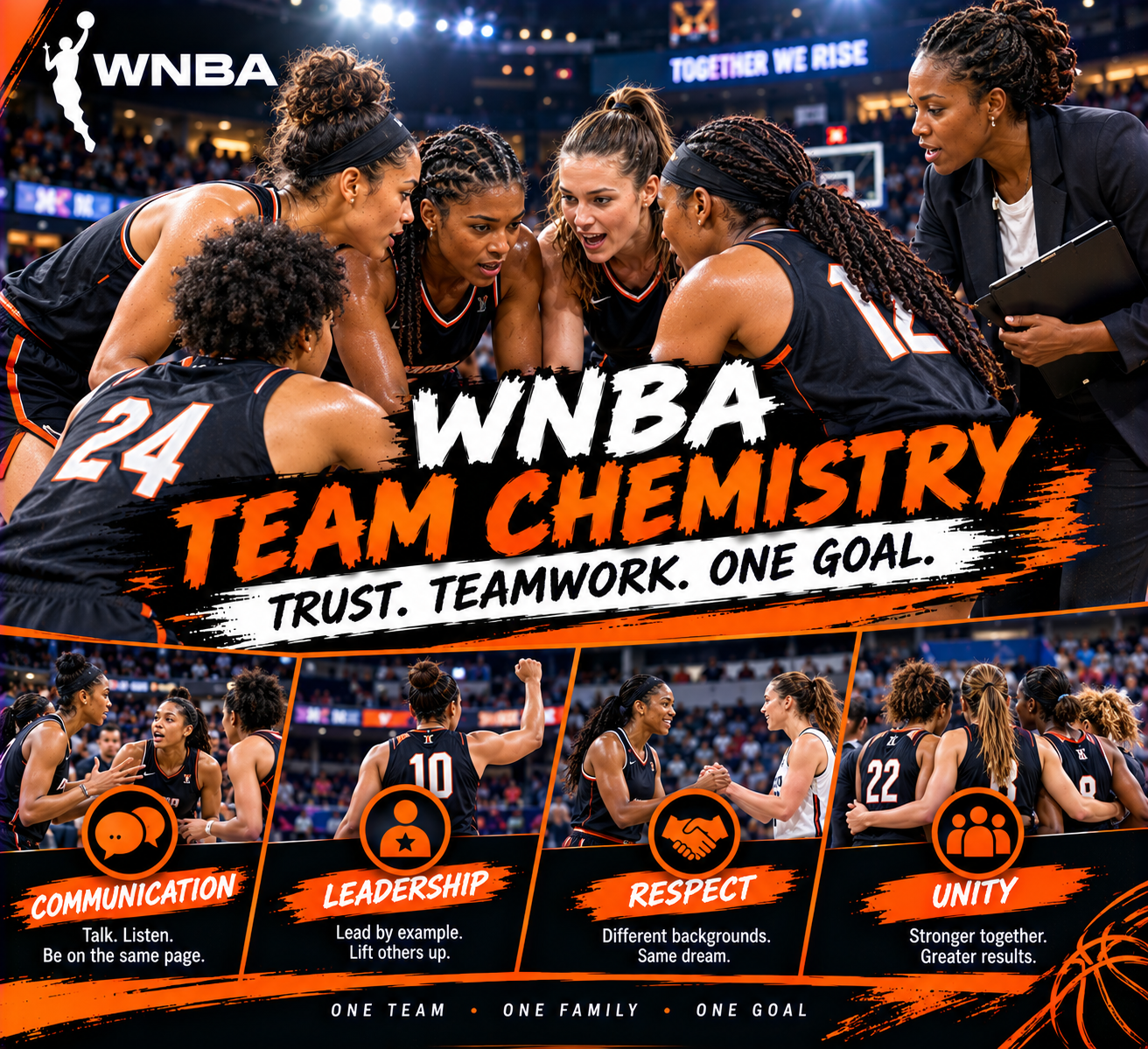
WNBA Team Chemistry: How Trust and Teamwork Help Teams Win
Discover how WNBA teams build strong chemistry through communication, trust, leadership, teamwork, and shared goals to improve performance on the basketball court.
Why Team Chemistry Matters in the WNBA
Basketball is not only about scoring points. It is also about trust, communication, teamwork, and understanding what every player brings to the team.
In the Women's National Basketball Association (WNBA), teams need talented players, but talent alone does not always guarantee success. Players must learn how to work together, support one another, and make smart decisions during difficult moments.
This connection between teammates is often called team chemistry.
A team with good chemistry understands its strengths, communicates clearly, and works towards the same goal. Players trust one another to do their jobs, whether that means making a pass, defending an opponent, collecting a rebound, or taking an important shot.
Building chemistry takes time. Players may need to adjust to new teammates, different coaching styles, and changes in their roles.
In this article, we explain what WNBA team chemistry means, why it matters, and how teams can build stronger relationships that improve their performance on the court.
1. What Is Team Chemistry?
Team chemistry is the connection players develop when they work well together.
It involves trust, respect, communication, and a shared understanding of how the team should play.
For example, a point guard may know exactly when a teammate is ready to cut towards the basket. A shooter may understand where to move to receive a pass. A defender may recognise when another player needs help.
These connections can make a team more effective.
Good chemistry does not mean that every player must be best friends outside basketball. Teammates can have different personalities and interests while still respecting one another and working towards a common goal.
What matters most is their ability to cooperate, communicate, and put the team's needs first.
2. Trust Is the Foundation of a Strong Team
Trust is one of the most important parts of team chemistry.
Players need to believe that their teammates will do their jobs and make responsible decisions during games.
A defender must trust that a teammate will provide help when necessary. A shooter must trust that the ball will reach her when she is open. A player passing the ball must believe that her teammate is ready to receive it.
Without trust, players may hesitate or try to do too much on their own.
Trust develops through consistent effort, honest communication, and dependable performances.
When players know they can rely on one another, they can make quicker decisions and play with greater confidence.
3. Communication Makes Teams Stronger
Communication is essential in basketball because the game moves quickly.
Players must share information while attacking and defending. They call out screens, warn teammates about opponents, request passes, and explain what they see on the court.
Good communication helps prevent confusion.
For example, two defenders may accidentally leave an opponent open if they do not communicate when switching assignments. Clear calls can help them understand who should defend the ball and who should cover the next player.
Communication also continues away from the court.
Players can discuss mistakes during practice, ask questions, and share ideas with coaches and teammates.
The more comfortable players become communicating with one another, the easier it may be to solve problems during games.
4. Learning Each Teammate's Playing Style
Every basketball player has different strengths.
Some players are excellent shooters. Others are strong rebounders, creative passers, powerful defenders, or skilled ball handlers.
Teams become more effective when players understand these differences.
A point guard who knows a teammate's shooting ability may look for her in the right position. A player who understands a centre's movement may deliver a pass at the perfect moment.
This understanding does not happen automatically.
Players need time to practise together, study one another's movements, and learn how their skills fit into the team's playing system.
When teammates understand what others do best, they can create more opportunities and reduce unnecessary mistakes.
5. Practice Builds Stronger Connections
Training sessions are not only about improving individual skills. They also help players develop chemistry.
During practice, teammates learn how to move together, communicate on defence, share the ball, and respond to different situations.
Coaches may use drills that require players to work together rather than focus only on individual performances.
For example, a passing drill can teach players to move without the ball and recognise open spaces. A defensive drill can help teammates learn when to switch assignments or provide support.
Repeated practice helps players become more familiar with one another.
When similar situations occur during games, they may react more quickly because they have already worked on those movements together.
6. Leadership Helps Bring Players Together
Strong leadership can help a team develop better chemistry.
Leaders may include experienced players, team captains, or athletes who naturally help others stay focused.
Good leaders encourage teammates, communicate clearly, and set a positive example through their actions.
They also understand that leadership is not only about giving instructions. Sometimes, it means listening to a teammate who is struggling or helping a younger player understand the team's expectations.
During difficult games, leaders can remind players to remain calm and focus on the next possession.
Effective leadership helps create an environment where players feel supported and understand their responsibilities.
7. Respecting Different Personalities
A WNBA team may include players from different countries, backgrounds, age groups, and basketball experiences.
These differences can bring valuable ideas and skills to the team.
However, teammates may not always think alike or approach problems in the same way.
Respect helps players manage these differences.
They should listen to one another, avoid unnecessary personal attacks, and discuss disagreements calmly.
Players do not need to agree on everything to work well together.
A team can remain united when everyone understands that respect is essential, even when opinions differ.
8. How Chemistry Improves Ball Movement
Good team chemistry can make passing and movement more effective.
When players understand one another, they may recognise open spaces, anticipate passes, and make better decisions.
Instead of forcing difficult shots, players can work together to create easier scoring opportunities.
For example, a player may drive towards the basket and draw two defenders before passing to an open teammate.
That pass becomes more effective when the shooter is prepared and understands where the ball may come from.
Strong chemistry does not guarantee perfect passing, but it can help players make better use of their skills.
Teams that share the ball effectively can be more difficult to defend.
9. Defensive Chemistry Is Just as Important
Team chemistry matters on defence as much as it does on offence.
Defenders must communicate, cover spaces, help teammates, and recover when opponents move the ball quickly.
If one player leaves her assignment to challenge a shot, another defender may need to cover the open opponent.
Without communication and trust, these movements can create gaps.
Strong defensive chemistry helps players understand when to provide support and when to return to their original assignments.
It can also improve rebounding because teammates learn how to position themselves and help secure the ball after a missed shot.
A team that defends together can make scoring more difficult for its opponents.
10. Supporting Teammates After Mistakes*'
Even the best basketball players make mistakes.
A player may miss a free throw, lose possession, or miss an important defensive assignment.
The reaction of teammates can influence what happens next.
Blaming or embarrassing a player may damage confidence and create tension. Offering useful encouragement can help the player refocus.
Support does not mean ignoring mistakes. Players should still learn from them and take responsibility for their actions.
The difference is how the team responds.
A strong team culture allows players to discuss problems honestly while continuing to respect one another.
This approach helps everyone focus on improvement rather than fear of making another mistake.
11. Handling Disagreements Within the Team
Disagreements can happen in any team.
Players may have different opinions about shot selection, defensive assignments, playing time, or how a game should be approached.
These disagreements do not automatically mean a team has poor chemistry.
The important issue is how players handle them.
Respectful discussions can help teammates understand different points of view and find solutions.
Coaches also play an important role by setting clear expectations and addressing problems before they become bigger issues.
When players learn to handle disagreements maturely, they can protect their relationships and keep their attention on the team's goals.
12. Why New Players Need Time to Fit In
When a team signs new players or adds draft picks, its chemistry may change.
New teammates must learn the team's playing style, communication habits, and expectations.
Even talented players may need time to adjust.
A new guard may need to understand how her teammates prefer to receive passes. A new centre may need to learn how the team's defenders handle screens and switches.
Coaches can help by organising practice sessions that encourage communication and cooperation.
Experienced teammates can also make the transition easier by explaining team routines and helping new players feel included.
Patience is important because chemistry often develops through shared experiences.
13. How Coaches Build Team Chemistry
Coaches influence the atmosphere within a team.
They can encourage players to communicate, share responsibility, and respect one another.
They also help define each player's role, which can reduce confusion and unnecessary competition between teammates.
Team meetings may provide opportunities to discuss goals, review performances, and address concerns.
Coaches can also design practice activities that require cooperation instead of rewarding individual effort alone.
However, chemistry cannot be built through instructions only. Players must also take responsibility for their behaviour and relationships.
When coaches and athletes work together, they can create a team environment that supports learning and strong performances.
14. Team Chemistry During Difficult Games
A team's chemistry is often tested when things are not going well.
Players may fall behind, miss important shots, or struggle against a strong opponent.
In these moments, frustration can spread quickly if teammates stop communicating or begin blaming one another.
Strong chemistry helps players remain focused.
They can encourage one another, discuss adjustments, and concentrate on the next possession instead of becoming distracted by earlier mistakes.
Good chemistry does not mean a team will always win a close game.
However, it can help players stay organised, work together under pressure, and continue following the game plan when the situation becomes difficult.
15. Can Team Chemistry Make a Team Better Than Its Rivals?
Team chemistry can be an important advantage, but it is not the only factor that determines success.
A team still needs talented players, good coaching, effective strategies, fitness, and consistent performances.
However, strong chemistry can help players use their abilities more effectively.
A group of talented athletes may struggle if they do not communicate or understand their roles. Meanwhile, a well connected team may perform better because its players cooperate and make smart decisions.
The strongest teams often combine individual talent with teamwork and preparation.
Chemistry cannot replace skill, but it can help turn individual skills into a stronger team performance.
16. Why Fans Should Pay Attention to Team Chemistry**
Fans often focus on points, rebounds, assists, and game results.
These statistics are important, but they do not explain everything that happens during a basketball game.
Watch how players communicate after a defensive stop. Notice whether teammates help one another after a mistake. Pay attention to how players move together when creating a scoring chance.
These moments can reveal how well a team works together.
Strong chemistry may not always appear in a box score, but it can influence the way a team plays.
Understanding this part of basketball gives fans another reason to appreciate the work that happens behind every performance.
Conclusion: Great Teams Grow Together
WNBA team chemistry is built through trust, communication, respect, leadership, and shared effort.
Players must understand one another's strengths, learn their roles, and work together during both good and difficult moments.
Coaches can encourage this process, but every player has a responsibility to contribute to a positive team environment.
Strong chemistry does not guarantee a championship. However, it can help a team communicate better, defend more effectively, create scoring opportunities, and respond to pressure.
Basketball is a team sport, and success often depends on how well players combine their individual abilities.
What do you think is most important for WNBA team chemistry: trust, communication, leadership, or teamwork? Share your opinion in the comments!